
Thursday, December 23, 2010
Making My Own Cookies
Looking back on Ken Kesey’s One Flew Over the Cuckoo’s Nest, I feel that Kesey really tries to make the point that people cannot rely on others in life. Bromden finally escapes when he decides to take things into his own hands. Without the reliance on McMurphy, Bromden can more clearly see what he wants and how he will accomplish this. Over break, I have also realized this. My friends and I decided it would be fun to have a cookie exchange. Everyone made three dozen cookies and then we would each get at least two of every kind of cookie. It seemed like a great idea at the time-make some cookies and receive a variety of cookies in return. Then, at the party, I realized I did not like majority of the cookies made. In fact, I would have rather just had my one over many of the other options. They just were not the cookies I wanted. I did not even get a chance to my own and ended up not eating very many cookies. Then, the next morning, I realized how much I really wished we all just stuck with our own cookies, as I got up in the morning feeling nauseous. I was now sick with food poisoning from someone’s cookies…awesome. As I lay on the couch the rest of the day, occasionally running for a bucket or something, I really regretted having the cookie exchange. Why not just make our own cookies? Why did we have to rely on everyone else to make cookies? From now, I will avoid cookie exchanges and make sure I take matters into my hands so I get what I want and do not end up sick. 

Sunday, December 19, 2010
20 Ways to Know You Take AP English 12 with Ms. Serensky
You know you are in AP English 12 when…
1.You have a blog. I mean, really, what senior in high school has a blog?
2.You feel weird reading a book without a pen in hand. Books just look blank without your scribbled notes.
3.You make fun of people who do not know what situational irony is.
4.You stalk Indian people. (Cough…Alex Kreger…cough.)
5.You often spend your time trying to come with the latest tune for “Bobbie’s Blog Banter.”
6.You wonder if Ms. Serensky really is watching you at all times. (She is.)
7.You evaluate your sanity an insane amount of times.
8.You laugh every time you hear the words, “Dear Journal.”
9.You begin to stress out if the desks are not in a circle.
10.You frequently say “Gogol” in an Indian accent.
11.You know what it feels like to turn in twenty plus pages of work at one time. Not to mention, you know what it feels like to stay up the entire night beforehand.
12.You feel nervous walking towards Ms. Serensky with money.
13.You get freaked out when all the lights are on in a classroom.
14.When you hear the word “America,” you immediately picture the flag in Ms. Serensky’s room coiled around the pole. (Or you picture Thomas Donley.)
15.You laugh at the juniors in AP English 11 and all their frivolous stresses.
16.You say “sorry” when you begin talking at the same time as someone, and then continue to talk.
17.You know that Ms. Serensky is obsessed with the twins’ relationship. (And you know who the “twins” are without me even saying their names.)
18.You have discussed English work and books in every other class. Moreover, all your other friends and teachers hate you for it.
19.The sight of a sticker on top of your paper makes you happier than a kid on Christmas morning.
20.You do homework on the second full day of winter break.
1.You have a blog. I mean, really, what senior in high school has a blog?
2.You feel weird reading a book without a pen in hand. Books just look blank without your scribbled notes.
3.You make fun of people who do not know what situational irony is.
4.You stalk Indian people. (Cough…Alex Kreger…cough.)
5.You often spend your time trying to come with the latest tune for “Bobbie’s Blog Banter.”
6.You wonder if Ms. Serensky really is watching you at all times. (She is.)
7.You evaluate your sanity an insane amount of times.
8.You laugh every time you hear the words, “Dear Journal.”
9.You begin to stress out if the desks are not in a circle.
10.You frequently say “Gogol” in an Indian accent.
11.You know what it feels like to turn in twenty plus pages of work at one time. Not to mention, you know what it feels like to stay up the entire night beforehand.
12.You feel nervous walking towards Ms. Serensky with money.
13.You get freaked out when all the lights are on in a classroom.
14.When you hear the word “America,” you immediately picture the flag in Ms. Serensky’s room coiled around the pole. (Or you picture Thomas Donley.)
15.You laugh at the juniors in AP English 11 and all their frivolous stresses.
16.You say “sorry” when you begin talking at the same time as someone, and then continue to talk.
17.You know that Ms. Serensky is obsessed with the twins’ relationship. (And you know who the “twins” are without me even saying their names.)
18.You have discussed English work and books in every other class. Moreover, all your other friends and teachers hate you for it.
19.The sight of a sticker on top of your paper makes you happier than a kid on Christmas morning.
20.You do homework on the second full day of winter break.
Wednesday, December 15, 2010
Fear
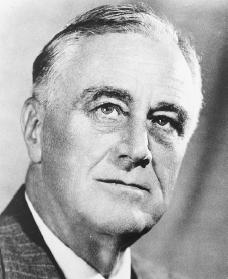
As we continue to read One Flew Over the Cuckoo’s Nest, I continue to grow frustrated with the treatment of the patients, when I struggle to find why they are even there. As we recently read, many of the patients are voluntary and could leave whenever they please. So, now I wonder why they stay in this miserable place. Why not leave? When McMurphy asked them this question, Bill Bibbit responded that they would leave, “If we had the g-guts!” (195). His response made me think of a quote from Franklin D. Roosevelt, where he stated, “The only thing we have to fear is fear itself.” Franklin D. Roosevelt helped the American people regain faith in themselves. He brought hope as he promised quick, forceful action. I found that this quote really applies to the characters in this novel. They allow themselves to suffer based solely on their fears. After the fishing trip, they feel bolder, more confident in themselves, further illustrating that they are capable of living a normal life. Still, they allow their own insecurities, their fears, to keep them locked up in this institution. I wish that these men could realize this and recognize that they have nothing to fear. I feel like McMurphy is showing them this, and slowly, the men are beginning to see it and maybe actually believe it. Like Roosevelt, McMurphy provides the patients with hope. He delivers potent action through his interactions with the nurse. His actions force the patients to relook at their conditions and see that their fears are absurd. With the help of McMurphy, I believe he can help these patients overcome their fear and in the end, lead happier lives.
Franklin Roosevelt:

Franklin Roosevelt:
Sunday, December 12, 2010
Call Me Crazy
Call me crazy, but I actually like One Flew Over the Cuckoo’s Nest. I know most people find it hard to believe that anyone would like any of the books we read in class, but I enjoy reading this book (despite the large amount of reading we have each night.) I find many of the characters likeable and humorous, particularly McMurphy and Harding. I enjoy Harding’s sarcastic remarks to the other patients and I love seeing him prove how smart he is as he explains things to McMurphy. McMurphy’s spirit always provides entertainment and I enjoy the ways he tries to get under Nurse Ratched’s skin. For example, when he came out in just a towel, which angered and shocked Nurse Ratched, then when he took it off and revealed he actually had shorts on. Even Nurse Ratched, though I do not like her, I like the drama she creates. I love to see what she or McMurphy will do next to get back at the other one. I also found poor Cheswick funny, for his blatant admiration for McMurphy. In comparison to The Namesake, I like this book so much more. The characters and the storyline are much more exciting. I found The Namesake boring majority of the time, as well as depressing. None of the characters seemed to ever feel happy. I did not like any of the characters in The Namesake, except for Ashima, who I mostly liked out of pity for her situation. I find One Flew Over the Cuckoo’s Nest very humorous as well. Through dialogue with the characters and Chief Bromden’s observations of the patients, I find the story can be very funny. I also find it interesting the Kesey found his inspiration for writing the book while being in an institution himself and experimenting with drugs. I wonder how much of the book comes from his own personal “trips” on acid, and which he thought of separately from that. I look forward to reading more about the story and I hope for more exciting conflict between McMurphy and Nurse Ratched. So, go ahead, call me crazy…I like the book.
Tuesday, December 7, 2010
Too Good to be True
People are funny. It seems like whenever people hear good news they cannot accept it immediately; they always think it seems too good to be true. Yet, as often times demonstrated in class discussions, people are too quick to believe the worst and criticize the fault found as soon as possible. Often times, when people hear good news they say things like, “No way!” or “I don’t believe you!” On the other hand, when people hear bad news their faces turn red within seconds and they have their pitchforks and torches in hand. I noticed this as I woke to a phone ringing early Monday morning, followed by my mom coming in my room to tell me that I had no school, it was a snow day. The first thing I said back to her was, “Are you serious?” Now, of course she was serious. What kind of mom would wake their child up early just to lie to them about a snow day? And why else would the phone be ringing at six in the morning? But, still, I had to check for myself. So, I called the school hot line, excited to hear the words “No school” but instead I heard “Chagrin Falls Schools are operating on a normal schedule.” I was so confused so I ran back into my mom’s room to ask who called her. I simply could not accept the amazing news of a school, even after she told me it was a recording from the school. Still, I waited until I had received a couple texts from friends before finally allowing myself to go back to sleep. So, why do we refuse to accept the good and unquestioningly accept the bad? For example, in class, when we prepared ourselves to watch The Namesake, I felt confident that we would have to take notes during the movie, even though the students in the class before already said we did not have to. Also, before the football game on Friday, we all expected to have to make up work for that day of class. We could not believe that the calendar simply read “Football Game.” I think part of the reason we will not instantly believe good news is that people do not want to feel disappointed. So instead, they build up this idea that it simply cannot be true. Then, they think that they will be even more excited when they find out it is true. However, I do wish I had gone right back to bed Monday morning, instead of sitting up anxiously for another half hour.


Sunday, December 5, 2010
Faye Haxby
After researching information about Ken Kesey and discovering what a wild life he led, I was surprised that he was married. I wondered who his wife, Norma Faye Haxby, truly was. I wondered if she participated in all of Kesey’s crazy antics and drugs or if she approved of what he did. In 1956, while attending college at the University of Oregon Haxby and Kesey eloped. Haxby and Kesey were high school sweethearts and first met in seventh grade. I found it interesting that the two married while Kesey still appeared driven and studious. This is how Haxby knew him; he was voted most likely to succeed in high school. Kesey and Haxby moved to a stretch of bohemian cottages near the Stanford Golf Course after he earned a scholarship in 1958 to Stanford. Haxby and Kesey had their first child in 1960, a girl, Shannon. They had their first son, Zane, in 1961. But, in 1961, Kesey changed. His determined attitude focused more on taking drugs than working in school. He began his journey with the “Merry Pranksters” in 1964. (Kesey and Haxby had a second son, Jed, in 1964.) Haxby was not a part of the “Merry Pranksters,” which included Kesey's best friends Ken Babbs and Neal Cassady, Carolyn Adams, Wavy Gravy, Paul Krassner, Stewart Brand, Del Close, George Walker and more. In 1967 Kesey had another daughter, Sunshine, with fellow “Merry Prankster” Carolyn Adams, also known as “Mountain Girl.” (Fun Fact: In the 1980’s, Adams married The Grateful Dead’s Jerry Garcia.) It amazes me that Haxby stayed with Kesey throughout all his road trips with the “Merry Pranksters,” his drug use and his infidelity. In fact, in an interview with Paul Pintarich, it sounds as though she felt miserable during his years on the road. In reference to the journeys of the beatniks in the 1950’s, Haxby remarked, “‘Ask the wives how much fun it was. You’ll get a much different story.’” This made me even more curious about why she stayed with him all those years; they remained married until Kesey’s death in 2001. Although, Kesey did calm down after his prankster adventures and he remained at home with his family. He became something no one ever expected-except maybe Haxby. He was a devoted family man who raised cattle and sheep, taught graduate writing seminars at the University of Oregon, coached wrestling, started a website and edited a magazine. Still, I wonder how she stuck it out all those crazy years. Maybe she knew more about him than anyone else. Maybe she did not care about his adventures. Or maybe she just really loved him. I guess love truly is “a crazy little thing.”
Here is a photo of Faye Haxby:

Here is a photo of Faye Haxby:

Monday, November 29, 2010
Prepared for the Worst
If you could know the day you will die, would you want to? It seems like an odd question, one with many factors to consider. Benefits and consequences definitely exist for either choice made. As I look at the English calendar for December and stare at the words “In-class Essay”, I cannot help but think about this question. I am not trying to compare an in-class essay to dying; rather I am simply saying that you could categorize each as an impending doom. (I know it seems extreme, Ms. Serensky, I do not think you are bringing us closer to our death though.) In my opinion, I think I would like to know when I will die. If I knew the day I would die then I could make sure that I did everything I needed and wanted to do before that. For example, for those who die at a young age, don’t you think they would have liked to have known that? What if they wanted to go skydiving, but never bothered to find the time? Instead, they most likely did not fulfill all that they wanted out of life. If you know the day you will die then you can prepare yourself for that day in any means you see as necessary. This is why I greatly appreciate the calendars we receive from Ms. Serensky. Sure, you may look ahead and see frightening words, typed in bold, such as, “Data Sheet Due” (January 7, by the way) and shudder. But at least you know when it will happen. In other classes, it sometimes feels as if a bus has hit us when a teacher announces when the test will be. Ultimately, this calendar allows us time to plan ahead and prepare ourselves as best as we can so that when the time comes for these dreaded events we are more than ready. So, thank you, Ms. Serensky, for giving us fair warning of when our doom will finally, painfully occur.
Saturday, November 27, 2010
Happily Ever After?
Several people commented on whether or not they want a “happy ending” when they read. It surprised me how many people said they preferred a more realistic, not necessarily happy ending to a book. I have to disagree with this opinion. I understand that endings can sometimes seem too idealistic, too perfect. Also, more realistic endings can provide you with more important life lessons and are often more relatable. However, when I read, or watch a movie, it gives me a chance to escape reality. So, why should I have to come out depressed? I highly doubt many children, or their parents, leave the movie theatre wishing they had seen a movie with a more realistic ending. That is like saying, “Yes, I enjoyed Finding Nemo. But I really wish that he never found Nemo, it just does not seem like real life.” In my opinion, that is exactly the point of stories-to escape from real life. Who wants to suffer through pages of their own personal struggles? Like Ashoke’s grandfather once said, books give people the chance “‘To travel without moving an inch’” (16). In a story, anything can happen. The poor become rich, families reunite, people find their one true love and live happily ever after. I guess I just cannot find anything wrong with a happy ending. It may seem odd to some, but personally, I enjoy closing the final pages of a book feeling satisfied with how it ended. I have my own life to live through reality; so, why not find a happy ending on the pages of a book?
Sunday, November 21, 2010
Speak Up
After watching the movie The Namesake I find it interesting to see how the characters’ relationships appear on screen. Situations can often come across differently because of how someone says something. As I thought about different ways to say something and how each affected the meaning of the phrase, I realized something: whispering, no matter what you say, is creepy. Anything you say in a whisper sounds incredibly creepy all of a sudden, no matter how innocent it is. Take for example the question: “Do you need a ride home?” When said in a normal voice it sounds completely normal, helpful even. Now picture someone asking you the same thing but in a whisper. Now, you find yourself thinking, “Well, I had no idea you drove a white van without windows, thanks but no thanks, creepy stalker, I’ll walk home. Oh, and don’t follow me.” Even the simplest compliment sounds creepy in a whisper, something like, “I like your shoes.” Normally, you feel flattered, but when someone whispers that to you, you seem to tighten up and run the other way in fear of the person who is most likely attempting to steal your shoes. After this realization, I wondered why people whisper at all. Minus the library, I see no appropriate place or reason for whispering. It seems strange to me that movies seem to have people whisper in romantic situations. Those smooth lines would never work on me if the guy were whispering. Whispering just sounds like something is off. What’s wrong with talking at a normal volume? What are you trying to hide? So, just a little advice: do not whisper anything to people unless you are in a library. Otherwise, things just get weird.
Monday, November 15, 2010
Too Little, Too Late
A couple weeks ago, as we discussed Chapter 5 of The Namesake we wrote down notes of what we wanted to happen. As I looked through my book today, in search of memorable quote for the datasheet, I came across my list. I laughed as I read my list, realizing that out of the things I wanted to happen, nothing really did, at least not as much as I hoped for. My list read as follows:
Want to happen:
• Gogol becomes closer with his father
• Appreciates the name “Gogol” more
• Remains connected with family
• Becomes more connected with Indian culture
• Forgets anger towards names
Beginning with the first one, Gogol, sadly did not reconnect with his father before his sudden death. Only afterwards, when it was too late, did Gogol realize all that he missed out on. When it comes to appreciation for his name “Gogol,” he again appears too late. He seems to begin to appreciate his name as he realizes that he will eventually never hear it again. Instead of the triumph eighteen-year-old Gogol would have felt, he feels “no sense of victory, no solace” (289). In terms of reconnecting with his family, he puts in his best effort of doing so after his father’s death. But why he could he not have done so when his father was still alive? Again, I feel his efforts came too late. Gogol seems to connect with his Indian culture, based on apathy as opposed to truly embracing it. He agrees to meet Moushumi so that his mom will stop nagging him. The two then give in to their parents’ demands to have a more traditional Bengali wedding simply because fighting them proves too difficult. Finally, his anger towards his name only seems to fade a little after hearing of Moushumi’s affair with Dimitri, when he realizes “for the first time in his life, another man’s name upsets [him] more than his own” (283). So, based on the unsatisfactory results of my hopes for Gogol in the book, I suppose I feel that Gogol was just a little too late in life. It always seemed to take some dramatic, life-changing event for him to finally grow up. I only wish he could have realized what he had sooner than later.
I encourage you to see if what you wanted came true, and I can only hope you feel more satisfied than I do.
Want to happen:
• Gogol becomes closer with his father
• Appreciates the name “Gogol” more
• Remains connected with family
• Becomes more connected with Indian culture
• Forgets anger towards names
Beginning with the first one, Gogol, sadly did not reconnect with his father before his sudden death. Only afterwards, when it was too late, did Gogol realize all that he missed out on. When it comes to appreciation for his name “Gogol,” he again appears too late. He seems to begin to appreciate his name as he realizes that he will eventually never hear it again. Instead of the triumph eighteen-year-old Gogol would have felt, he feels “no sense of victory, no solace” (289). In terms of reconnecting with his family, he puts in his best effort of doing so after his father’s death. But why he could he not have done so when his father was still alive? Again, I feel his efforts came too late. Gogol seems to connect with his Indian culture, based on apathy as opposed to truly embracing it. He agrees to meet Moushumi so that his mom will stop nagging him. The two then give in to their parents’ demands to have a more traditional Bengali wedding simply because fighting them proves too difficult. Finally, his anger towards his name only seems to fade a little after hearing of Moushumi’s affair with Dimitri, when he realizes “for the first time in his life, another man’s name upsets [him] more than his own” (283). So, based on the unsatisfactory results of my hopes for Gogol in the book, I suppose I feel that Gogol was just a little too late in life. It always seemed to take some dramatic, life-changing event for him to finally grow up. I only wish he could have realized what he had sooner than later.
I encourage you to see if what you wanted came true, and I can only hope you feel more satisfied than I do.
Saturday, November 13, 2010
Poor Gogol
After reading Chapter 11 of The Namesake, my sympathy for Gogol grew. Unlike his sister, Sonia, he continues to struggle through a boring and unhappy relationship. All the initial excitement and passion in their relationship has gone away and instead replaced with dissatisfaction and a growing divide. Yet poor Gogol appears to remain hopeful. He continues to try to reignite their spark. As he waits for her to return from her supposed conference, he debates over the perfect Christmas present for her. Ultimately, he decides to plan a surprise trip for the two of them to Italy, thinking, “maybe that’s what he and Moushumi need” (272). My pity for Gogol grows because, unbeknownst to him, while he hopes to save their love, she continues to cheat on him with Dimitri and shows no effort to repair the marriage. Then, as he returns to the apartment and the doorman tells him that Moushumi returned, Gogol feels “grateful for her simple act of returning to him” (273). This line really frustrated me as I read. Not only does it make me feel more sympathetic for Gogol, but it also makes me dislike Moushumi more. All Gogol needs for his happiness is her presence, yet she cheats on him. Moushumi gets too caught up in her efforts for an exciting and independent lifestyle and ignores the fact that she has a good husband who loves her. Gogol does not deserve the disrespect he receives from Moushumi and Moushumi does not deserve him. Gogol has never treated her poorly, only looking to please her, and she treats him as if she never loved him at all. I believe Lahiri wants to create pathos for Gogol to foreshadow a greater divide between Gogol and Moushumi and ensure that the reader will support Gogol. I hope that Gogol will soon realize how poorly Moushumi treats him and get away from this horrible marriage.
Wednesday, November 10, 2010
Why not?: Chapter 9 Discussion Reflection
As our class discussed Gogol and Moushumi's relationship in Chapter 9, we spent a great deal of time discussing Moushumi's decision to keep her last name after the two married. We discussed our personal belief on whether or not a woman should take a man's name when they marry. This is an issue I have thought about many times before in my life. As a young girl, I felt confident that I would not take the last name of my husband. I felt this way because of one specific reason- I wanted to keep my Irish last name. My heritage represents a part of me that I do not want to lose just because I marry a man without an "O" or "Mc" in his name. However, in The Namesake, both Moushumi and Gogol fight their Indian culture growing up, often feeling more embarrassed rather than proud of their obviously Indian names. I find this surprising and disappointing. If Moushumi had married a man who was not Indian, Graham for example, I would understand her wanting to keep her name, to represent her culture. But instead she marries Gogol and still keeps her name. In fact, "the thought of changing her last name to Ganguli has never crossed [her] mind" (227). This fact bothers me far more than the fact that she does not change her name. Although, I do not know whether or not I will keep my name, I do not believe any woman should feel an obligation to change her name. Why should a person change who they have been for their whole life? I do, however, believe that the woman should have a reason for not wanting to change it. Moushumi does not provide any solid reason for why she keeps her name. As further illustrated in the chapter, Moushumi's only reason seems to be that she feels disconnected to Gogol and their marriage. Moushumi's inconsiderate attitude proves more bothersome throughout the chapter than her decision to keep her name. It simply becomes another item on the list of things she does that exemplify her lack of passion for their marriage and her desire for independence. In Moushumi's case, I wonder "why not?" when it comes to taking Gogol's last name.
Subscribe to:
Comments (Atom)